

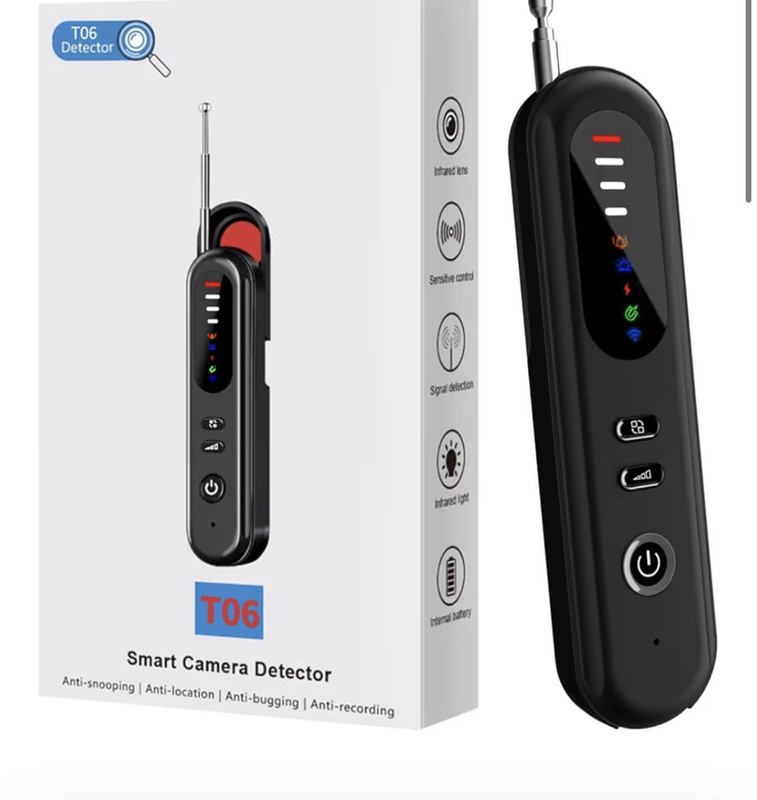
The smart detector helps you check rooms for hidden cameras and tracking devices. It scans for wireless signals and lens reflections, so it is useful in hotel rooms, rental apartments, changing rooms and meeting spaces.
Handheld and battery powered, it lights and sounds when it detects a suspicious signal and has modes for anti-sneak shooting, anti-eavesdrop, anti-positioning and anti-tracking. It is small enough to take on trips.
Key Features of the Anti-Spy Hidden Camera Detector
- Hidden camera detection – finds camera lenses and wireless transmitters.
- Anti-eavesdrop mode – looks for listening devices.
- Anti-positioning mode – detects GPS trackers.
- Handheld size – easy to carry.
- Rechargeable – USB charging.
Anti-Spy Hidden Camera Detector Specifications
| Function | Detects hidden cameras and trackers |
| Power | Rechargeable battery |
What Is in the Box
- Detector
- USB charging cable
- Manual
Good to Know
- Detectors indicate possible devices; always follow up with a visual check.
- Results can vary with signal conditions.
Buying Guide
How to choose a security camera: decide first where it will be used. Indoor cameras focus on features such as pan and tilt, two-way audio and a privacy-friendly design, while outdoor cameras need a weatherproof housing and good night vision. Check the resolution, because higher megapixel counts give clearer faces and number plates, and look for motion alerts so you are notified when something happens.
Think about power and storage. Wi-Fi cameras need a nearby power point, solar models need sunlight, and wired kits need cable runs to a recorder. Footage can be stored on a memory card, on a hard drive in a recorder, or in a paid cloud service. Place cameras at entry points and at a height that is hard to reach, and keep the firmware and app updated.
Good practice: change the default password, use a strong Wi-Fi password and tell visitors or staff that recording is in use where the law requires it.