


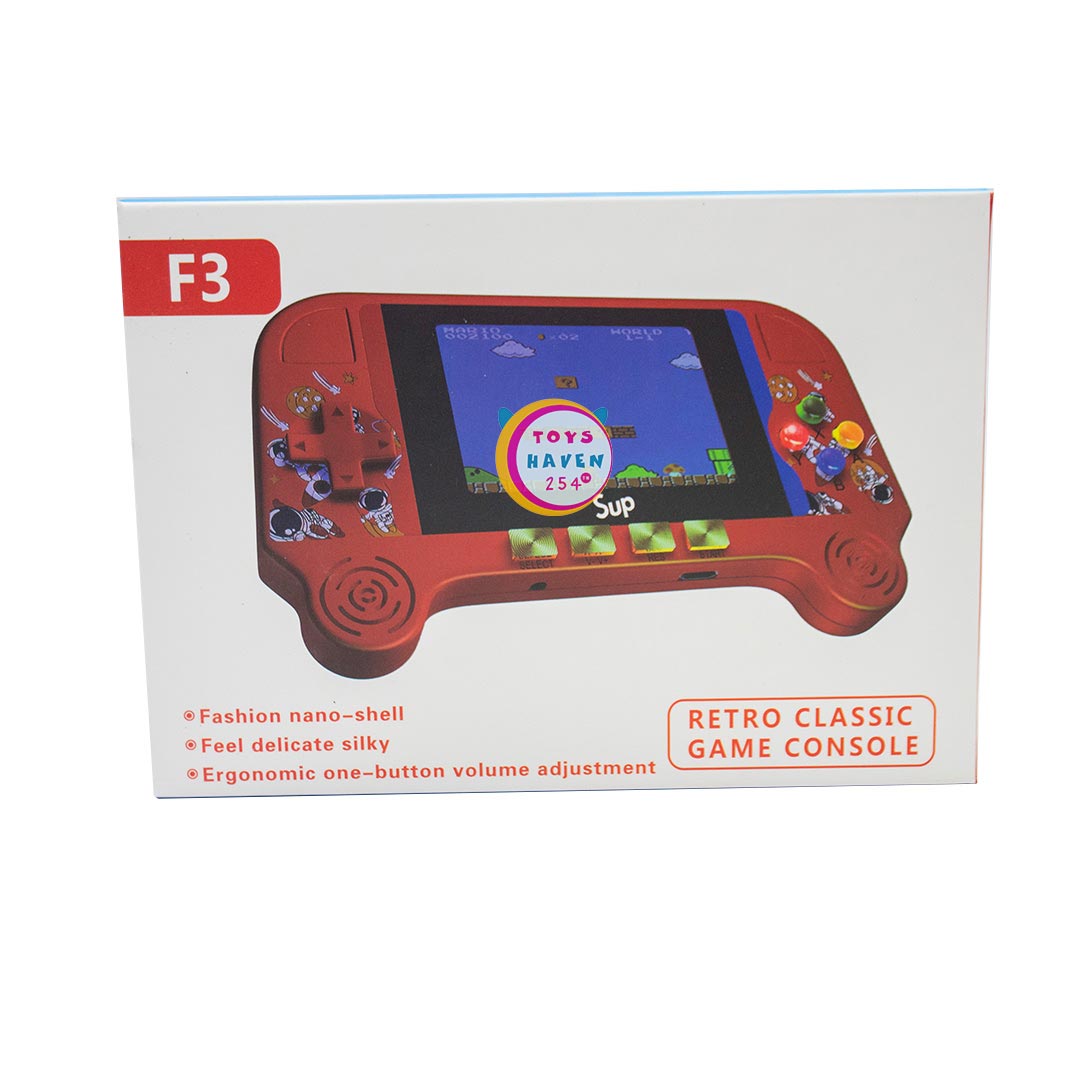
The F3 is an affordable handheld game console with a 4.3 inch colour screen and more than 10,000 preloaded retro games. The bold red shell and large buttons suit younger players, and the screen is big enough to enjoy 8-bit and 16-bit classics comfortably.
A built-in rechargeable battery means no disposable batteries are required, and a TV output lets you share the games on a bigger screen. It is one of the lowest-cost ways to get a big library into a child’s or collector’s hands.
Retro consoles of this type run games through built-in emulators, so the preloaded library covers classic arcade, 8-bit, 16-bit and handheld titles. The game count quoted by the manufacturer includes duplicates and regional versions, and compatibility can vary from title to title.
Key Features of the F3 Retro Handheld Game Console
- 4.3 inch screen – a larger display than pocket-size retro handhelds.
- 10,000+ games – a huge library of classic titles.
- Rechargeable battery – recharge over USB.
- TV output – play on a TV when you want a bigger picture.
- Simple controls – D-pad and buttons suited to classic games.
F3 Retro Handheld Game Console Specifications
| Model | F3 Retro Console |
| Screen | 4.3 inch |
| Games | 10,000+ preloaded |
| Power | Rechargeable battery, USB charging |
What Is in the Box
- F3 handheld console
- USB charging cable
- AV cable (if supplied)
Good to Know
- Output to a TV works with the cable supplied in the box; use the TV input that matches the cable type.
- Charge with a standard 5V USB charger and a quality cable.
- Game titles and counts are those advertised by the manufacturer; library contents can differ slightly between production batches.
- Keep the device away from water and extreme heat to protect the battery and screen.
Buying Guide
How to choose a retro game console: start with how you want to play. A handheld lets you play anywhere and needs no TV, while a plug-and-play stick or box connects to a TV and is better for two-player sessions with family and friends. Check the controller type, since wireless pads are convenient but need charged batteries, while wired pads are always ready.
Look at the game library with realistic expectations. Counts such as 20,000 or 30,000 games usually include many duplicates and different regional versions of the same title, so the number of unique games is lower than it sounds. Emulated 8-bit and 16-bit games run very well, whereas demanding 3D titles can be slower. Storage in the device or on a memory card determines how many games it can hold, and a TV output lets you share the screen with others.
Care tips: charge the battery fully before the first session, avoid leaving the device in a hot car, and keep the screen and buttons clean with a dry cloth.